
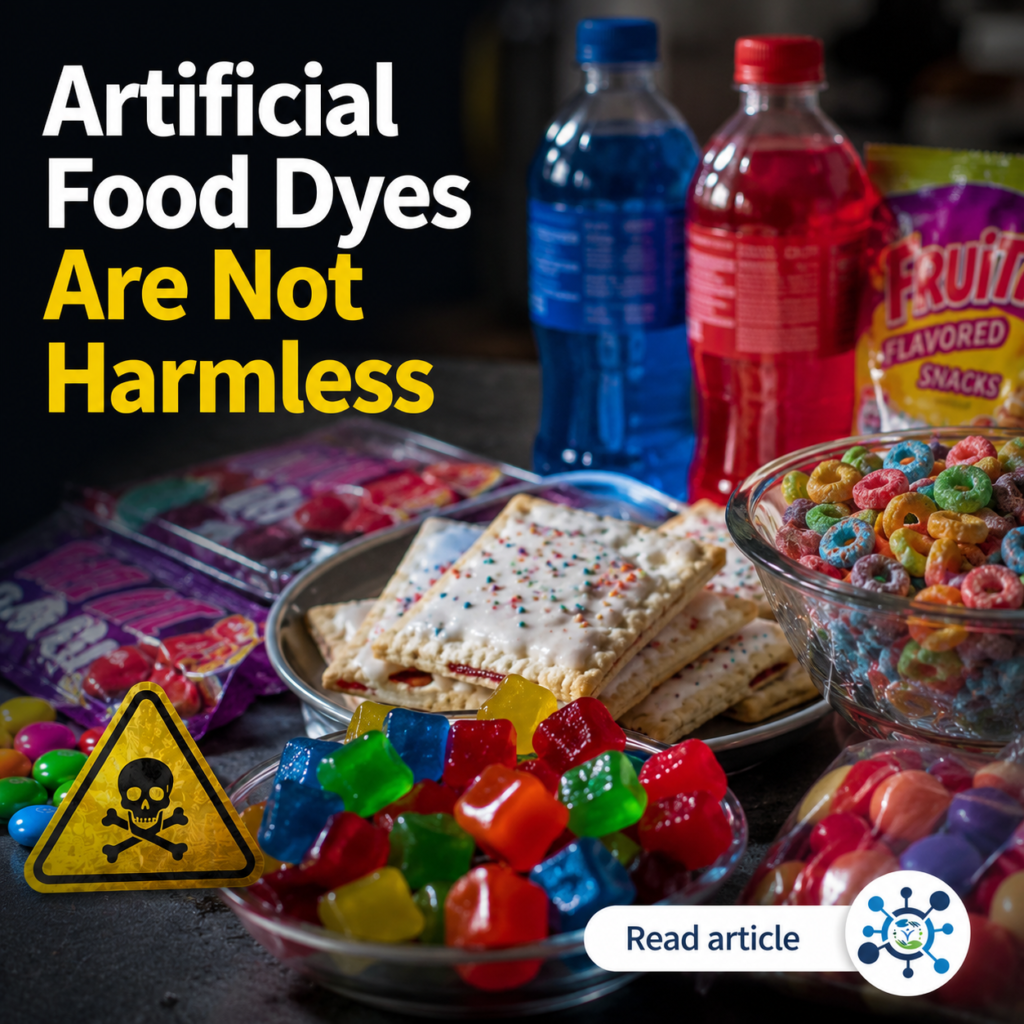
Bright colors in food are not always a sign of fun. Sometimes they are a sign of unnecessary chemicals.
Many artificial food dyes are petroleum-based and commonly found in candy, snacks, cereals, drinks, desserts, and foods marketed to children. These dyes provide no nutritional benefit, and public health advocates have raised concerns about their potential effects on behavior, development, and long-term health.
If a food needs artificial color to look exciting, it may not be doing much for your body.
Simple steps you can take today:
Read ingredient labels before buying snacks.
Limit foods with Red 40, Yellow 5, Yellow 6, and Blue 1.
Choose naturally colored foods when possible.
Reduce ultra-processed snacks for children.
At INMUHEALTH, prevention starts with education and routine checkups, including wellness monitoring, lifestyle risk reviews, lab work when needed, and referrals for specialized care.
Your path to a healthier tomorrow begins today.
Schedule your visit:
Call (305) 274-5319
For more health and wellness tips, visit inmuhealth.org.
Educational content only. Not medical advice. Consult a qualified healthcare professional for personal guidance.
#INMUHEALTH #PrimaryCareMiami #PreventiveHealth #MiamiHealth #HealthEducation #FoodDyes